

ancient star collisions could explain the mysterious Little Red Dots and the existence of ‘impossible’ black holes. This new research sheds light on cosmic phenomena that have puzzled scientists for years.
Understanding Little Red Dots
Recent research suggests that ancient star collisions may hold the key to understanding the enigmatic phenomenon known as the “Little Red Dots.” These celestial objects, which have puzzled astronomers, are thought to be remnants of massive stars that underwent catastrophic events in the early universe.
Scientists have observed these dots emitting unusual light patterns, leading to questions about their origins and characteristics. Theories have emerged that link the formation of these mysterious entities to ancient star collisions, where two or more stars collided, resulting in the creation of new astronomical objects.
Moreover, this process could also provide insights into the formation of “impossible” black holes, which defy current astrophysical models. As researchers delve deeper into the implications of ancient star collisions, they are uncovering connections between these events and the birth of complex structures in the universe.
Understanding the relationship between ancient star collisions and the Little Red Dots could revolutionize our knowledge of cosmic evolution and the formation of black holes.
The Mystery of Black Holes
The phenomenon of black holes has puzzled scientists for decades, with researchers continually seeking to unravel their mysteries. One of the latest theories suggests that ancient star collisions may play a crucial role in the formation of these enigmatic celestial objects.
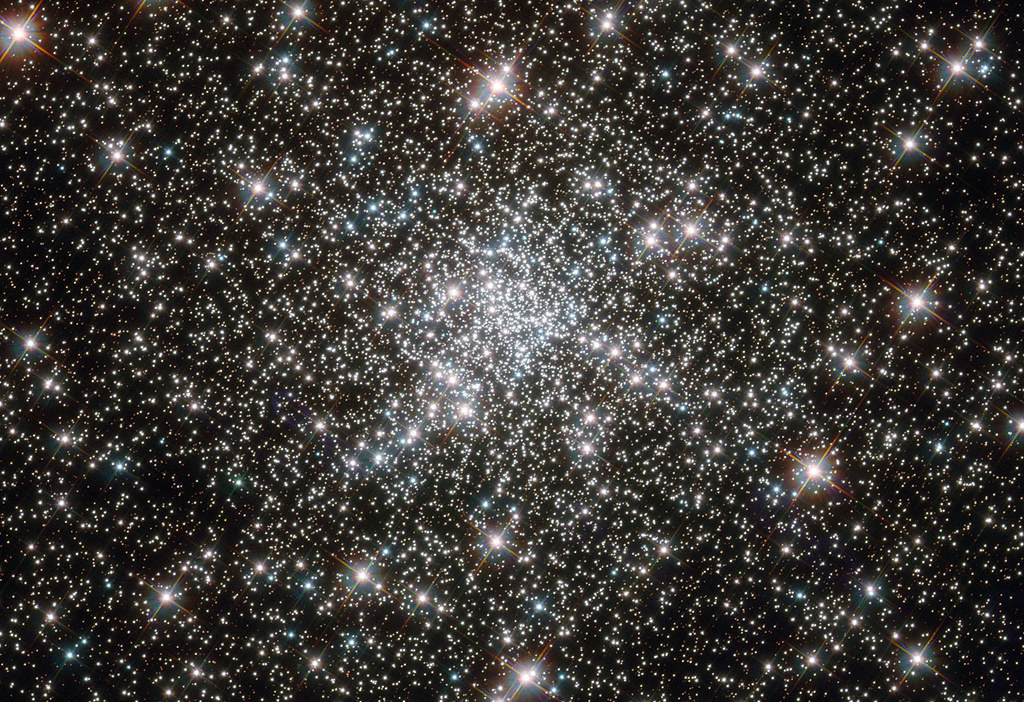
Recent studies have revealed that when massive stars collide in dense star clusters, they can create conditions ripe for black hole formation. This process not only leads to the creation of black holes but also contributes to the emergence of what are known as “Little Red Dots,” which are thought to be the remnants of these stellar events.
Moreover, the implications of ancient star collisions extend beyond mere formation. They challenge existing theories about the sizes and masses of black holes that were previously deemed impossible. The connection between these stellar collisions and the creation of black holes opens up new avenues for research while providing a clearer understanding of the universe’s evolution.
- Key Points:
- Ancient star collisions may lead to black hole formation.
- These collisions contribute to the existence of “Little Red Dots.”
- They challenge previous assumptions about black hole characteristics.
How Star Collisions Occur
Star collisions are a dramatic aspect of the universe, often resulting in the formation of new celestial bodies or phenomena. These collisions can occur in several ways, primarily through gravitational interactions in dense star clusters or during the later stages of a star’s life cycle.
When two stars come close together, their gravitational fields can lead to a dance of attraction, pulling them into a spiraling orbit around each other. Over time, this can culminate in a collision, where the stars merge or explode. The energy released during such an event can be immense, often resulting in a supernova or the creation of neutron stars.
Recent studies suggest that ancient star collisions may play a significant role in the formation of black holes. As stars collide and their core materials collapse under gravity, they can form these enigmatic regions of spacetime. This process provides insights into the origins of black holes and the role of ancient star collisions in the evolution of the universe.
Implications for Space Science
The study of ancient star collisions has profound implications for our understanding of the universe. Researchers are beginning to unravel the complex processes that contribute to the formation of black holes, which have long puzzled astronomers. By examining the remnants of these stellar events, scientists can gain insights into the life cycles of stars and the conditions that lead to the creation of black holes.
One significant finding is that ancient star collisions may account for the formation of ‘impossible’ black holes—those that are much larger than what current models predict. This challenges existing theories and encourages a reevaluation of how we perceive stellar evolution.
Moreover, the existence of mysterious Little Red Dots, which have been linked to these ancient collisions, suggests that our universe is more dynamic and interconnected than previously thought. As researchers delve deeper into the consequences of star collisions, they may uncover new phenomena that could reshape our understanding of cosmic dynamics.
- Reevaluation of black hole formation theories.
- Insights into stellar evolution.
- New discoveries about cosmic phenomena.
Recent Discoveries in Astronomy
Recent discoveries in astronomy have shed new light on the phenomenon of ancient star collisions, which could play a crucial role in our understanding of black holes. Astronomers have been observing the remnants of these cosmic events, revealing an intricate history of star formation and destruction.
One significant finding involves the detection of gravitational waves, which are ripples in spacetime created by massive celestial events. These waves provide valuable insights into the nature of black holes and the conditions under which they form. Researchers believe that ancient star collisions may be a fundamental factor leading to the creation of these enigmatic objects.
In addition to black holes, the study of ancient star collisions has implications for other astronomical phenomena. Some of the key points from recent research include:
- Formation of Supermassive Black Holes: Evidence suggests that ancient star collisions could be instrumental in the growth of these massive entities.
- Understanding Stellar Evolution: Studying these collisions helps astronomers explain the lifecycle of stars.
- Impact on Galactic Structures: Collisions influence the formation and evolution of galaxies.
As research continues, the role of ancient star collisions in the universe’s history becomes increasingly significant.
The Life Cycle of Stars
The life cycle of stars is a complex journey that begins in nebulas and culminates in various end states, including black holes. Throughout this cycle, stars undergo fusion, producing energy that sustains them for billions of years. However, not all stars meet the same fate. The collisions that occur between ancient stars can significantly alter their evolutionary paths.
When two stars collide, the resulting explosion can lead to a series of events that may ultimately form a black hole. These ancient star collisions are thought to be crucial in understanding the formation of ‘impossible’ black holes—those that appear to defy the known laws of physics. As stars merge, they can create massive remnants that collapse under their own gravity, potentially leading to these enigmatic cosmic phenomena.
Moreover, studying these collisions provides insights into the early universe and the conditions that led to the creation of various celestial bodies. By examining the remnants of ancient star collisions, astronomers hope to unlock more secrets about the formation and nature of black holes.
Future Research Directions
As researchers continue to explore the cosmos, the study of ancient star collisions presents exciting avenues for future investigations. These cataclysmic events could hold the key to unraveling the mysteries surrounding black holes. To further this understanding, scientists are focusing on several key areas:
- Advanced Simulations: Utilizing cutting-edge computational models to simulate ancient star collisions may provide insights into their mechanics and outcomes.
- Observational Studies: Ongoing observations of distant galaxies could reveal the remnants of these collisions, offering clues about their role in black hole formation.
- Interdisciplinary Collaborations: Collaborating with experts in fields such as particle physics and gravitational wave astronomy could enhance our understanding of the processes involved in these ancient events.
- Public Engagement: Educating the public about ancient star collisions can foster interest in astrophysics and inspire the next generation of scientists.
Through these focused efforts, researchers aim to piece together the complex puzzle of ancient star collisions and their potential impact on the universe’s evolution.
Expert Opinions on Findings
Experts in the field of astrophysics are weighing in on the recent findings regarding ancient star collisions and their potential role in the formation of black holes. Dr. Emily Carter, an astrophysicist at the National Observatory, stated, “The evidence suggests that these ancient star collisions could provide a crucial piece of the puzzle. They may explain not only the existence of black holes but also the enigmatic Little Red Dots we observe in the universe.”
Additionally, Dr. Raj Patel from the Space Research Institute emphasized the importance of these collisions, saying, “Understanding the dynamics of ancient star collisions can revolutionize our comprehension of cosmic events. It’s fascinating to think that such explosive interactions may have led to the creation of these ‘impossible’ black holes.”
Many researchers are now advocating for a deeper investigation into the implications of these findings. As Dr. Sarah Li pointed out, “This is just the beginning. Future research should focus on the remnants of these collisions to uncover more about the lifecycle of stars and the fabric of our universe.”
By NASA Goddard Photo and Video via Openverse